
The new generation Renault Duster 2026 has been launched: Hybrid engines and a completely changed interior compared to the Dacia version
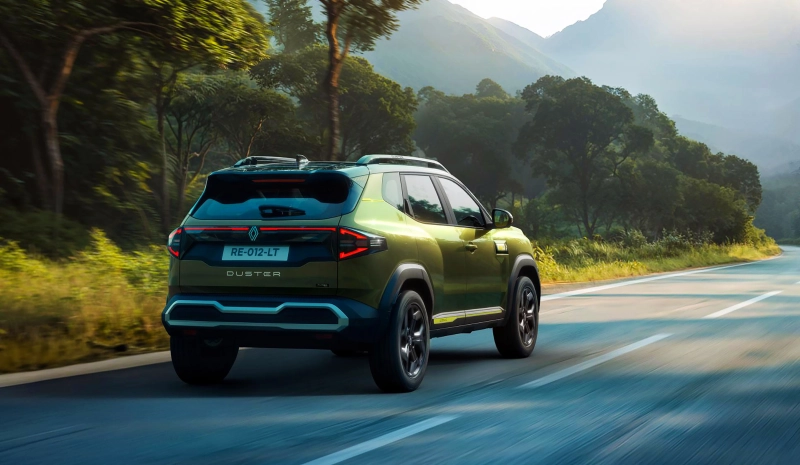
Renault Duster reinvents itself for India: More luxury, Google technology and a 158 hp engine
After an absence that left fans in Asia nostalgic for the first generation, the legendary SUV is back in full force. Renault has officially launched the new generation Duster for the Indian market, and this time, the French have decided that the "brother" under the Dacia logo is not sophisticated enough for local demands. The result? A vehicle that retains its well-known robustness, but seriously increases the premium and performance chapters.
An exterior design with its own identity
Although the silhouette remains recognizable, the new Renault Duster visually distances itself from the Dacia model through details that give it a more imposing appearance:
- New light signature: The famous "Y"-shaped headlights on the Dacia disappear, being replaced by a simplified but more elegant LED system.
- Redesigned front end: The grille proudly integrates the "Renault" name, and the bumper has been restyled with a generous air intake and silver protective shields that imitate aluminum.
- Revised rear: The taillights and rear bumper have received aesthetic touches that emphasize the SUV's urban-chic character.
The revolution in the cabin: Curved screen and integrated Google
If the changes on the outside are noticeable, on the inside we are talking about a radical transformation. Renault understood that the Indian public is looking for gadgets and comfort, which is why the dashboard is completely different from the European one.
The centerpiece is a massive, curved display that unites the 10.25-inch digital instrument cluster with the 10.1-inch multimedia system. Furthermore, the infotainment system runs native Google apps, offering a fluid user experience similar to that of higher segments.
Premium segment features:
- Thermal comfort: Electrically adjustable seats and, extremely important for the Indian climate, ventilated.
- Ambient: Large panoramic roof and customizable ambient lighting.
- Practicality: 518-litre boot (expandable to 700 litres) and electrically operated tailgate.
- Audio: Arkamys sound system for a superior acoustic experience.
Engines: Power and Efficiency (Without 4x4)
Under the hood, Renault India offers configurations tailored to local needs, with an emphasis on automatic transmissions and raw power. The major surprise is the absence of all-wheel drive, with the model being available exclusively with front-wheel drive.
| Engine Variant | Power Output | Transmission | Technical Highlights |
| 1.0 Turbo Petrol | 99 hp | 6-Speed Manual | Entry-level unit, optimized for urban fuel efficiency. |
| 1.3 Turbo Petrol | 158 hp | 6-Speed Automatic | High-performance 4-cylinder engine for highway driving. |
| 1.8 Strong Hybrid | 158 hp | Automatic (Multi-mode) | Self-charging hybrid system combining petrol and 2 electric motors. |
The 1.8-liter hybrid engine represents a step up from the 1.6-liter version available in Europe, offering additional resources and optimized consumption in the congested traffic of Indian metropolises.
Safety and Local Production
The new Duster makes no compromises when it comes to safety, being equipped as standard with 6 airbags and a full suite of driver assistance systems (ADAS).
The model will be assembled locally at Renault's plant in Chennai, which will allow it to maintain competitive prices in a segment dominated by rivals such as the Hyundai Creta or Kia Seltos.
Conclusion
The Renault Duster for India is a demonstration of adaptability. Although it shares the CMF-B platform with Dacia, the level of equipment and interior refinement positions it in a much more ambitious area, transforming the "honest car" into a technologically advanced and comfortable SUV.