
New rules for Chinese auto giants: Selling price can no longer be lower than factory cost
Chinese automakers forced to abandon sales below production cost
While we're still getting used to the idea that a car can come from the same manufacturer that makes our phones, China — the world's largest auto market — has just decided to put an end to the "wild west" of pricing. On February 12, 2026, authorities in Beijing issued a historic directive prohibiting domestic manufacturers from selling their cars at prices lower than the full cost of production.
Farewell, "Alms on Wheels"?
The price war, initially sparked by Tesla in 2022 and carried over to giants like BYD, created a paradox: consumers were happy, but the industry was bleeding. Over the past three years, this trade conflict has “melted” about $68 billion in the value of Chinese industrial production.
The new regulation of the State Administration for Market Regulation (SAMR) does not play by halves. The cost of production is now defined extremely rigorously, including:
- Direct factory expenses;
- Administrative and financial costs;
- Marketing and sales budgets.
Basically, Beijing wants to stop the "race to the bottom" where small producers were crushed, and the profitability of the entire sector had reached a historic low. Moreover, any form of price fixing between producers and suppliers was banned, a practice that kept the entire supply chain under pressure.
Who are the “Invaders”? A Guide to Chinese Brands
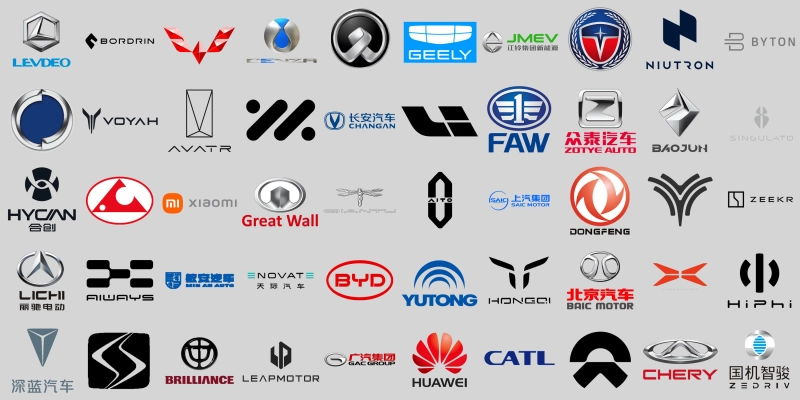
If in Romania the name BYD (Build Your Dreams) has started to sound familiar, the Chinese market is a vast universe. Many brands are already on our roads, even if under "disguise" or new names. Here are the big players:
| Category | Main Brands | Note for the Romanian Market |
| State-Owned Giants | SAIC (MG), Dongfeng, FAW (Hongqi), BAIC, Changan | MG is currently the best-selling Chinese brand in Romania. |
| Private Leaders | BYD, Geely, Chery, Great Wall Motor (GWM) | Geely owns Volvo and Polestar. Chery recently launched the Omoda and Jaecoo brands locally. |
| New EV Forces | NIO, XPeng, Li Auto, Leapmotor, Zeekr | NIO is often called the "Tesla of China" and is preparing for its official entry into Romania. |
| Tech Giants | Xiaomi, Huawei (via the AITO brand) | The Xiaomi SU7 became a global phenomenon almost overnight. |
Impact in Romania: What's Changing for Us?
Although the measure targets the domestic market in China, the shockwaves will also reach Europe. Until now, the Chinese strategy has been simple: high volume, low price, fast market share.
In January 2026, BYD achieved a rare performance in Romania, entering the Top 10 best-selling brands, surpassing established European manufacturers. However, Chinese officials warn that banning below-cost sales could "chill" aggressive innovation, as companies can no longer use assumed losses as a growth strategy.
For the Romanian buyer, this could mean more stable prices, but also competition based more on after-sales service and technology, rather than on discounts that seem "too good to be true".
"We no longer want to just be the cheapest, we want to be the best," seems to be Beijing's new subtle message.
It remains to be seen whether small producers will survive without the "oxygen" of hidden subsidies, or whether the market will consolidate around 4-5 major global champions.