
How Romanians lose out when buying second-hand cars: cars brought from abroad have a double risk of fraud
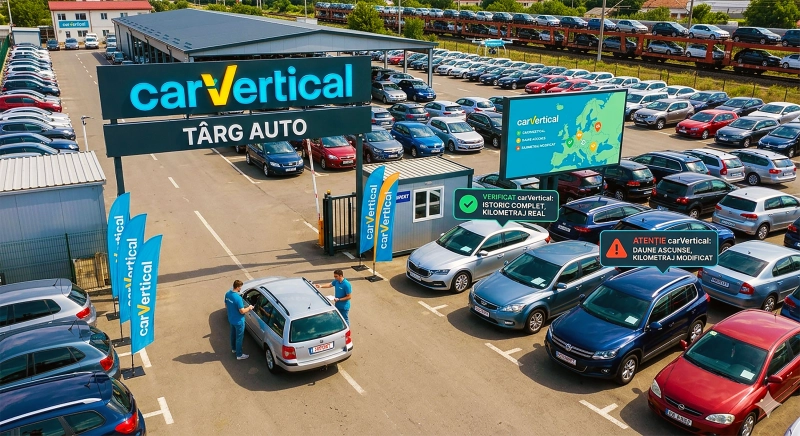
The black hole in Romanians' pockets: 131 million euros lost annually in the "lottery" of falsified mileage
Bucharest, March 2026 – The Romanian used car market continues to be a minefield for buyers, generating colossal financial losses and keeping the country at the bottom of European transparency rankings. According to the latest detailed study, presented by carVertical at the Auto Summit 2026, odometer fraud costs Romanian consumers approximately 131.6 million euros each year.
The analysis, which X-rayed millions of car registrations, reveals a harsh reality: a deceived buyer pays, on average, 14.5% more than the car's real value, just because the numbers on the dashboard have been artificially "rejuvenated".
The "data lock" at the border: Imports, the main source of risk
One of the biggest vulnerabilities of the market remains the dependence on cars brought from abroad. Over 60% of the used car fleet in Romania comes from imports, and these vehicles are 1.5 times more likely to have modified mileage than those originally purchased by us in the country.
The central problem is defined by experts as a cross-border “data bottleneck.” Once a car crosses the border, service history and previous mileage readings are often lost in a legislative and administrative vacuum between states, providing the ideal context for fraud by samsars.
Romania, ranked 22nd out of 25 in the Transparency Index
The situation shows no signs of improvement, quite the opposite. According to the carVertical Transparency Index, Romania ranks an honorable 22nd out of a total of 25 European countries analyzed. The data show a worsening trend: if in 2024 the rate of cars with modified mileage was 6.9%, in 2025 it increased to 7.5%, and forecasts for the end of 2026 suggest that it could reach the critical threshold of 8.2%.
This lack of transparency is also fueled by the constant obsolescence of vehicles on the road. The average age of cars checked on the platform has increased in recent years from 9.4 to 10.2 years, making data manipulation more tempting for sellers who want to hide real wear and tear.
Hidden damage and rising repair costs
Beyond mileage, accident history remains a "stain" that is difficult to clean. Almost 6 out of 10 cars (58.2%) checked had previous damage. The average value of a damage recorded for conventional cars is 16,589 lei, an amount that can destabilize any family's budget if it is not known at the time of purchase.
The Electric Paradox: Harder to Fraud, but Much More Expensive to Repair
The study brings both a ray of hope and a warning about new technologies. The share of electric cars (EV) verified in Romania has exploded, increasing more than 8 times (from 0.16% in 2021 to 1.32% in 2026). Tesla has become the undisputed leader in this segment, representing 41.8% of all electric verifications, dethroning traditional brands such as Volkswagen.
The good news for future electric car owners is that they are much harder to digitally defraud. The odometer fraud rate for EVs has dropped dramatically, from 8.7% in 2021 to just 1.9% in 2026.
However, the financial risk remains high in another form:
- Cost of damage: For electric vehicles, the average value of a repair reached 26,477 lei, reflecting buyers' orientation towards premium models (Audi, BMW, Mercedes-Benz), where complex technology implies huge service bills.
- The Hybrid Trap: Hybrid cars remain frequent targets for odometer manipulation, a dangerous practice that hides the true wear and tear on the battery and complex powertrain, leaving the buyer at risk of a costly battery replacement soon after purchase.
Conclusion: A market where trust comes at a high price
The data presented at Auto Summit 2026 confirms that, without a centralized digitalization of automotive data at European level, Romania will continue to lose the battle against fraud. Until then, the burden remains on the shoulders of the consumer, who, in the absence of a rigorous background check, risks not only paying the 14.5% "naivety tax", but also putting into circulation vehicles whose technical safety is a great unknown.