
BMW Group: Over one million cars to roll off German assembly lines in 2025
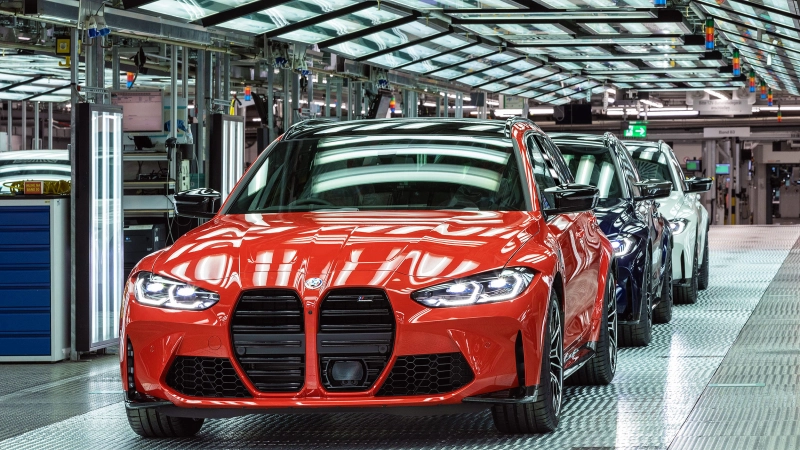
BMW dominates the German auto industry: One in four cars produced in 2025 will bear the Bavarian emblem
In a year marked by major economic challenges for Europe's major automakers, the BMW Group has managed to consolidate its leading position in the domestic market. Representatives of the Bavarian manufacturer officially announced that, in 2025, the brand's plants in Germany once again exceeded the symbolic threshold of one million cars produced, a performance that underlines the resilience of the brand's strategy.
One in four German cars is a BMW
The national context provides an impressive perspective on this volume. In 2025, the German automotive industry produced a total of around 4.15 million vehicles (according to data from the VDA - Association of the German Automotive Industry).
This means that around 25% of Germany's total car production comes from the BMW Group. In fact, one in four cars that roll off the assembly lines in the federal territory bears the imprint of the Munich-based manufacturer.
Production Map: The 4 "engines" of Germany
BMW maintains its industrial footprint through four key plants, each with a well-defined strategic role, where thermal, hybrid and electric models are produced flexibly on the same assembly line:
| Plant Location | Key Models Produced (2025) | Strategic Role & Focus |
| Dingolfing | 4, 5, 7, 8 Series, i5, i7, iX, M4/M5 (all variants) | The primary hub for luxury, high-performance, and high-end EV models. |
| Leipzig | 1 Series, 2 Series Active Tourer/Gran Coupe, MINI Countryman | Specializes in compact segment flexibility; the only German plant producing MINI. |
| Munich | 3 Series, 4 Series Gran Coupe, i4, M3 | The historic heart of the brand; currently transitioning to the Neue Klasse generation. |
| Regensburg | X1, X2, iX1, iX2 | High-volume production center focused on Premium Compact SUVs (SAV/SAC). |
Comparative Analysis: Production Trend (2023 - 2025)
If we look at the figures from recent years, we see a remarkable stability of BMW in Germany, at a time when rivals such as Volkswagen or Mercedes-Benz reported greater fluctuations or declines in domestic production.
- 2023: BMW produced around 950,000 units in Germany as supply chains stabilized post-pandemic.
- 2024: Production reached the 1 million unit mark, with Regensburg becoming the group's most productive plant in Europe (over 342,000 units).
- 2025: The volume of over 1 million is maintained, despite the fact that BMW has invested heavily in retooling the lines for the next generation of electric vehicles (Neue Klasse).
Although BMW produces over a million cars in Germany, the group's largest plant globally remains Spartanburg (USA), which mainly serves the American market and the X range.
Why does BMW succeed where others stagnate?
The success of 2025 is attributed to the strategy of "technology neutrality". While some competitors have bet exclusively on electric, BMW has continued to offer high-performance internal combustion engines and plug-in hybrids alongside the i (electric) range. This flexibility has allowed German plants to adjust production in real time, depending on market demand, without blocking assembly lines.