
50 years of Mercedes-Benz W123: The story of the series that refused to age
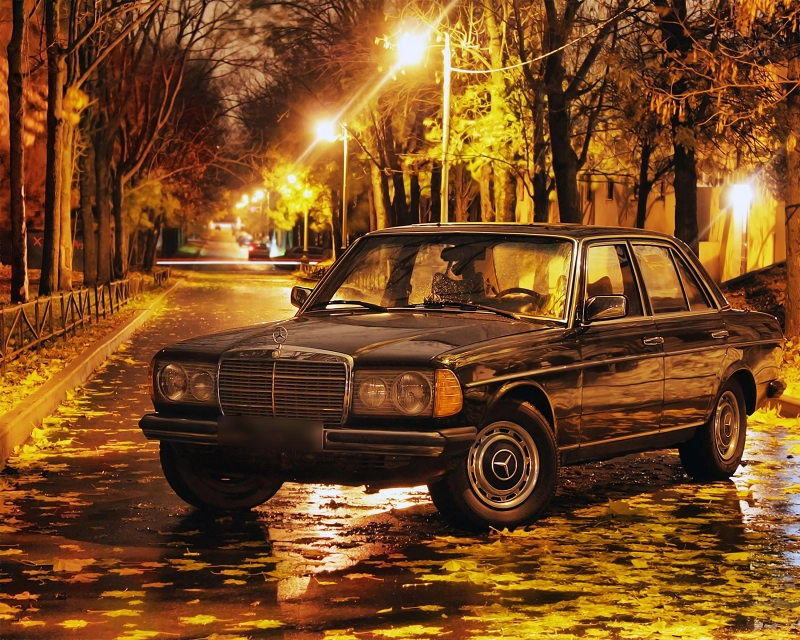
50 Years of W123: The "Cobra" that conquered the world and became the symbol of reliability in Romania
In the history of motoring, few models have managed to achieve the status of “immortal”. In early 1976, on the sunny coast of France, Mercedes-Benz launched the W123 series, a model that not only defined the concept of an affordable luxury sedan, but also set standards of robustness that the modern industry seems to have forgotten. Today, five decades after that launch, the W123 remains a living legend, considered by many to be the best-built Mercedes-Benz of all time.
A revolution of engineering and diversity
The success of the 123 series was no accident. The engineers in Stuttgart took the technical sophistication of its "big brother", the S-Class (W116), and translated it into a more compact and versatile package.
- Unprecedented diversity: Although it started as a classic sedan, the range quickly expanded with the Coupe variant (C123) and, for the first time in the brand's history, with an officially factory-built Estate model (S123).
- Visionary safety: The W123 was a pioneer in safety, introducing the deformable steering column and later the driver's airbag (starting in 1982).
- Staggering figures: Over 2.7 million units left the assembly lines by 1986. The model's popularity was so great that, in the early years, waiting lists reached 12 months, and "second-hand" cars were sometimes sold for more than new ones, just to avoid the wait.
"Cobra" on the roads of Romania: Between the luxury of the nomenclature and the dream of the ordinary Romanian
In Romania, the Mercedes-Benz W123 quickly acquired the nickname "Cobra." Although the origin of the name remains a subject of debate (some say it comes from the shape of the grille, others from the position of the dual headlights on the higher-end variants), its impact was undeniable.
Communist Period: Symbol of Power
In the 1970s and 1980s, owning a W123 in Romania was an almost intangible status statement. They were the preferred cars of embassies, the Foreign Ministry, and high-ranking members of the nomenclature. To the Romanian who drove a Dacia 1300, the "Cobra" seemed like a spaceship: silent, with velour or leather seats and a diesel engine that emitted a metallic "gnawing" sound, a sign of unwavering power.
The 90s: The "King" of the Second-Hand Market
After the 1989 Revolution, the W123 became the "Holy Grail" of the first entrepreneurs and Romanians who started importing cars from the West. Even though they already had hundreds of thousands of kilometers on board, these cars were welcomed with open arms.
Romania's roads at the time, full of potholes and with a precarious infrastructure, were the real test for the "Cobra"'s suspension. The 240 D model became legendary in the country for its ability to run on any type of diesel fuel (sometimes even less filtered tractor diesel) without stopping. It was the car that "built" the first transport and taxi businesses in post-December Romania.
An endurance record in motorsport
It wasn't just the public roads that bore witness to German genius. In 1977, the W123 proved that luxury doesn't preclude extreme endurance in the London-Sydney Rally. The race, a brutal marathon of over 30,000 kilometers, was won by a 280 E, proving that Mercedes-Benz engineering can survive the most hostile environments on the planet.
Conclusion
After 50 years, the Mercedes-Benz W123 is not just a vintage car; it is a testament to an era when automobiles were designed to last a lifetime, not just a leasing cycle. In Romania, the “Cobra” remains in the collective memory as the ultimate symbol of German reliability — the car that refused to die, no matter how tough the roads or the times. Today, thanks to the Mercedes-Benz Classic program, this legend continues to roll, reminding us that true quality is timeless.